How Peripheral Artery Disease (P.A.D.) Affects Your Lower Limbs: What Your Legs and Feet May Be Telling You
Have you ever noticed that your calves start aching halfway through a walk, only for the discomfort to disappear once you stop and rest? Maybe one foot always feels colder than the other. Or perhaps you've noticed a small sore on your toe that just doesn't seem to be healing the way you expected.
It's easy to brush these changes off.
You may blame age, arthritis, uncomfortable shoes, or simply being out of shape. Sometimes that's exactly what is happening. But in other cases, your legs and feet may be telling you something about your circulation.
One condition that deserves attention is Peripheral Artery Disease, commonly called P.A.D.
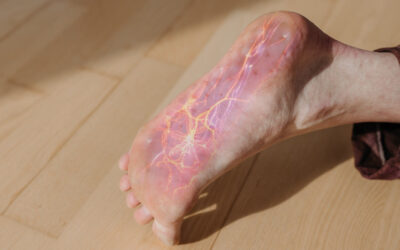
P.A.D. affects the arteries that carry blood away from the heart to other parts of the body. When those arteries become narrowed, less blood reaches the muscles and tissues of the lower limbs. Because your legs and feet are farthest from your heart, they can be among the first places where circulation problems become noticeable.
At Capital Foot Care, Dr. Muhammad A. Khalid, DPM, Dr. Fritz-Andre Duterlein, and Dr. Herman Zarate work with patients who are experiencing foot and lower-limb concerns that may be connected to circulation. Recognizing those signs early can make an important difference.
What Is Actually Happening in Your Legs When You Have P.A.D.?
Your muscles need oxygen-rich blood to work properly.
When you are sitting or resting, narrowed arteries may still allow enough blood to reach your legs for you to feel relatively normal. But once you begin walking, climbing stairs, or exercising, your muscles suddenly need more oxygen.
If the arteries cannot deliver enough blood to meet that demand, discomfort can begin.
This is why one of the classic symptoms of P.A.D. is leg pain or cramping that appears during activity and improves after resting. You may feel it in your calf, thigh, hip, or even your foot.
Think of it as a supply-and-demand problem. Your legs are asking for more blood, but narrowed arteries are having difficulty keeping up.

That Leg Cramp May Be More Than a Leg Cramp
One reason P.A.D. can go unnoticed is that the symptoms don't always seem alarming at first.
Someone may walk through the grocery store and notice aching in the calves. They stop for a moment, the discomfort improves, and they continue shopping.
Over time, they may simply begin walking less.
That's where things can become tricky. Instead of recognizing a pattern, people sometimes adjust their lifestyle around the discomfort without realizing it. They take the elevator instead of the stairs. They park closer. They avoid longer walks.
Eventually, what looked like a minor inconvenience may begin affecting mobility and independence.
Recurring leg discomfort with activity—especially when it consistently improves with rest—is worth discussing with a healthcare professional.
P.A.D. Can Affect More Than How Your Legs Feel
Pain is only part of the picture.
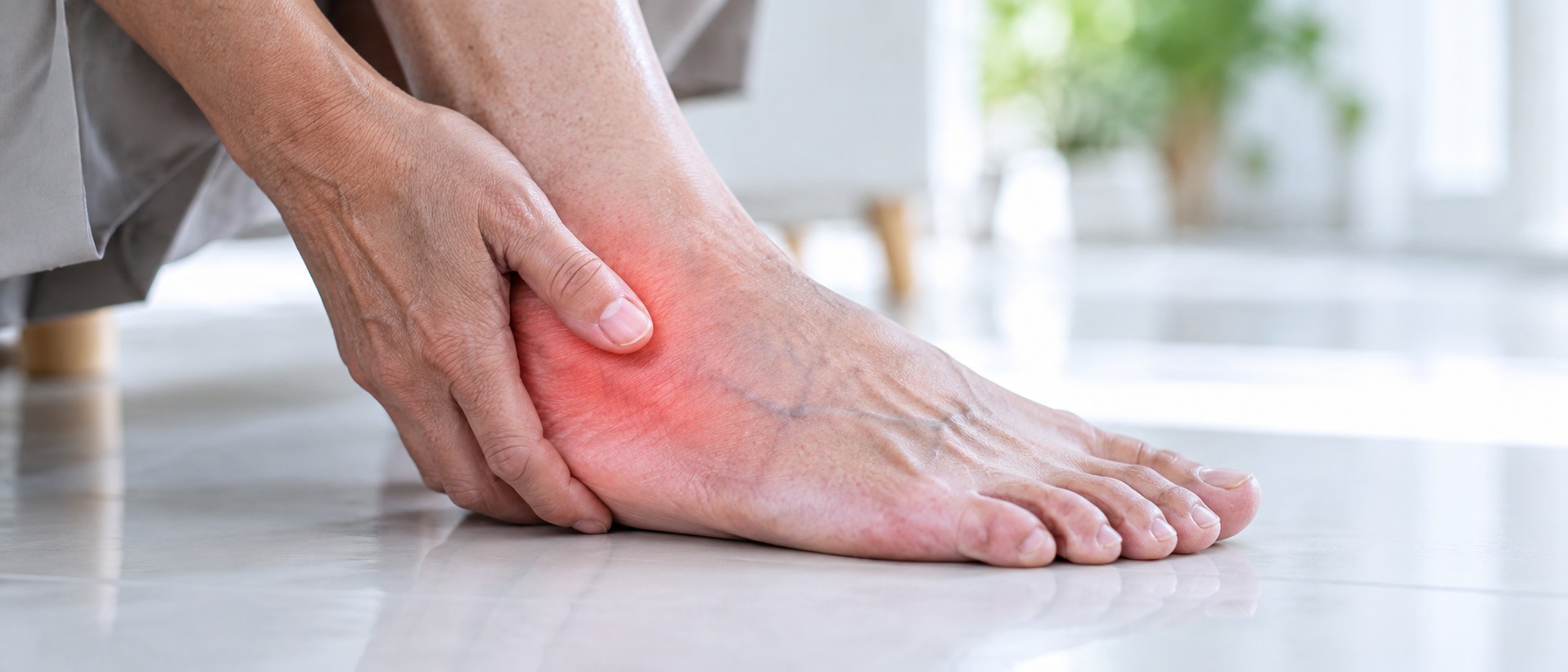
Reduced circulation can also change the appearance and condition of your lower legs and feet.
You may notice that one foot feels cooler than the other. Skin may appear unusually pale, reddish, bluish, or otherwise different from what is normal for you. Hair on the lower legs may become sparse, and toenails may grow more slowly.
Some people experience numbness, weakness, or a heavy feeling in their legs. Others may notice very few symptoms at all.
That's important to understand: you don't necessarily need significant pain to have P.A.D.
For some patients, the first noticeable problem isn't leg pain. It's a foot wound that isn't healing.
Why Small Foot Wounds Matter When Circulation Is Poor
Most of us have had a blister, scrape, or small cut on the foot at some point. Under normal circumstances, the body sends oxygen, nutrients, and infection-fighting cells through the bloodstream to repair the damaged tissue.
When circulation is reduced, that process becomes more difficult.
A small wound may take longer than expected to close. A blister caused by a shoe may become an open sore. A tiny area of irritated skin may continue getting worse instead of better.
This becomes particularly concerning when P.A.D. and diabetes occur together.
Someone with diabetic neuropathy may not feel an injury clearly, while P.A.D. can make healing more difficult. That combination means a patient may have a wound they don't immediately notice and a circulation problem that makes the wound harder to resolve.
At Capital Foot Care, our Diabetic Foot Care, P.A.D. management, Routine Foot Care, and Advanced Wound Care services allow us to look at the foot as part of a bigger picture rather than treating only what is visible on the surface.
When P.A.D. Becomes More Serious
In more advanced P.A.D., circulation may become poor enough that discomfort occurs even when you are not walking.
Some patients notice pain in the foot or toes while resting, particularly at night. Others develop persistent wounds, skin breakdown, or areas of tissue that begin to deteriorate because they are not receiving enough blood.
These are not symptoms to watch for several weeks to see what happens.
Significant new foot discoloration, severe persistent pain, a foot that suddenly becomes unusually cold, or a worsening wound deserves prompt medical attention.
The earlier a circulation problem is identified, the more opportunities there may be to manage it before complications become more serious.
What Does P.A.D. Have to Do With Your Overall Health?
Your feet can sometimes provide clues about what's happening elsewhere in your body.
P.A.D. is commonly associated with atherosclerosis, the buildup of plaque within arteries. If plaque is affecting the arteries supplying your legs, there may also be cardiovascular disease affecting arteries in other parts of the body.
That is one reason P.A.D. shouldn't be viewed simply as a "foot problem."
Recognizing P.A.D. can open the door to a broader conversation about cardiovascular health, blood pressure, cholesterol, diabetes management, smoking, physical activity, and other factors that may influence circulation.
A podiatric evaluation can be an important part of that picture, particularly when the first noticeable symptoms are appearing in the feet or lower legs.
How Capital Foot Care Helps Patients With Circulation Concerns
When a patient comes to Capital Foot Care with recurring leg discomfort, changes in the feet, or a slow-healing wound, we don't want to look only at the symptom.
We want to understand why it is happening.
Our providers can evaluate the condition of the feet, skin, nails, wounds, sensation, and circulation and determine whether further evaluation or coordinated care may be appropriate.
For patients who already know they have P.A.D., ongoing foot care is especially important.
Routine examinations can help identify pressure areas, skin breakdown, nail problems, wounds, or other changes before they become more difficult to manage. Patients with diabetes may benefit from combining this care with regular diabetic foot evaluations.
Capital Foot Care provides:
- Peripheral Artery Disease evaluation and management
- Diabetic Foot Care
- Advanced Wound Care
- Routine Foot Care
- In-Office Surgery
- Sports Medicine
Dr. Muhammad A. Khalid, DPM, Dr. Fritz-Andre Duterlein, and Dr. Herman Zarate are committed to helping patients understand not only what is happening with their feet, but also what they can do to protect them going forward.
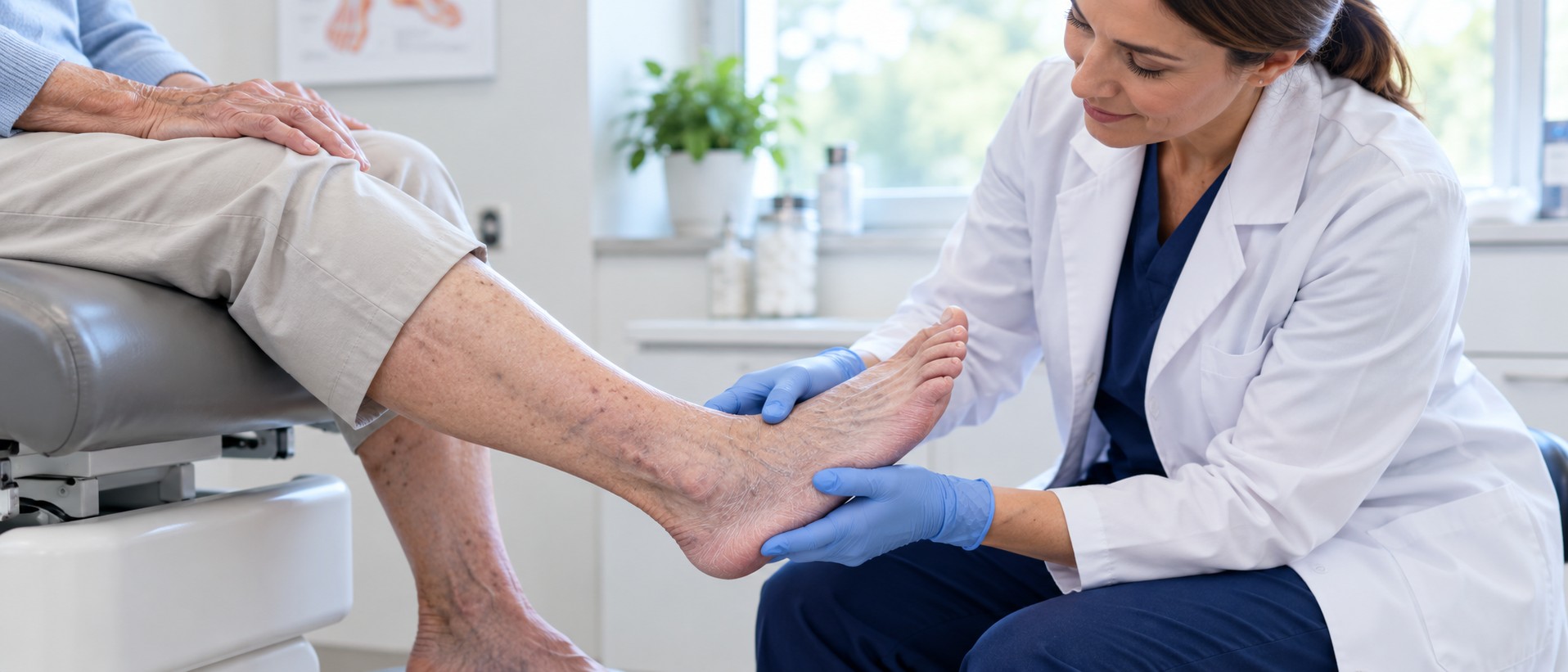
Don't Wait for Your Feet to "Get Worse Enough"
One of the most common mistakes people make with circulation problems is waiting for the symptoms to become severe before scheduling an appointment.
You don't have to wait until walking becomes extremely painful.
You don't have to wait for a wound to become infected.
And you don't have to decide on your own whether the changes you're seeing are serious.
If your legs repeatedly ache when you walk, one foot feels unusually cold, your skin has changed color, or a wound isn't improving as expected, those are reasonable reasons to have your feet evaluated.
Sometimes the answer will be reassuring. Other times, identifying a circulation problem early may help prevent something much more difficult later.
Pay Attention to What Your Legs and Feet Are Telling You
Your feet carry you through nearly every part of your day, and they can provide valuable clues about your health.
Pain while walking, persistent wounds, temperature differences, skin changes, numbness, or weakness aren't symptoms that should automatically be dismissed as "just getting older."
At Capital Foot Care, we want patients to feel comfortable asking questions before a small concern becomes a major one.
If you are experiencing symptoms that could be related to poor circulation or P.A.D., contact Capital Foot Care at 301-927-FOOT (3668) or email [email protected] to schedule an evaluation.
Your legs shouldn't have to become severely painful before you start listening to them.
Sometimes, a small change is your body's way of asking you to pay attention.

Frequently Asked Questions About P.A.D. and the Lower Limbs
What does P.A.D. leg pain usually feel like?
People describe P.A.D.-related discomfort in different ways, including cramping, aching, heaviness, burning, fatigue, or tightness. A common pattern is discomfort that develops while walking or climbing stairs and improves after a few minutes of rest.
Can you have P.A.D. without leg pain?
Yes. Some people with P.A.D. have unusual symptoms, mild symptoms, or no noticeable symptoms. Changes such as slow-healing wounds, cooler feet, skin discoloration, or slower nail growth may sometimes provide clues.
Why does P.A.D. cause foot wounds to heal slowly?
Healing depends on adequate blood flow. Blood brings oxygen and nutrients to damaged tissue. When circulation to the feet is reduced, the body's ability to repair a wound and fight infection may be affected.
Is P.A.D. more concerning if I have diabetes?
Diabetes and P.A.D. can be a particularly concerning combination. Diabetes may contribute to decreased sensation in the feet, while P.A.D. reduces circulation. This can make foot injuries more difficult to notice and more challenging to heal.
When should I have my feet checked?
Consider an evaluation if you experience recurring leg pain while walking, numbness, unusual temperature or color changes, persistent foot pain, or a wound that is not healing normally. People with diabetes or known circulation problems may benefit from regular preventive foot examinations even when they are not experiencing pain.