
Foot Fungus That Keeps Coming Back: Why Treatment May Not Be Working
You’ve treated the itching, changed your socks, and tried an antifungal cream. For a while, your feet seemed better. Then, a few weeks later, the peeling and irritation returned.

Sound familiar?
Foot fungal infections can be frustrating, especially when you’ve made an effort to treat them. Sometimes the infection wasn’t completely eliminated. Other times, the fungus may have returned from your footwear or surroundings. And occasionally, what looks like a fungal infection isn’t fungus at all.
Understanding what’s happening is the first step toward finding lasting relief.
At Capital Foot Care, we believe patients deserve more than a temporary solution to recurring foot problems. Our team helps patients understand their symptoms, identify possible causes, and explore appropriate treatment options.
Is It Really a Fungal Infection?
When your feet itch or peel, it’s tempting to assume you have athlete’s foot.
That’s certainly one possibility. Athlete’s foot, medically known as tinea pedis, is a common fungal infection that can cause itching, burning, cracked skin, and scaling, particularly between the toes.
But here’s something many patients don’t realize: not every itchy or peeling foot has a fungal infection.
Eczema, psoriasis, and irritation from footwear materials can produce similar symptoms. Even certain bacterial skin conditions may resemble athlete’s foot.
This distinction matters because treatments that work for one condition may do very little for another.
If you’ve repeatedly used antifungal products without noticeable improvement, a professional examination can help determine whether fungus is actually responsible.
Why Does Athlete’s Foot Keep Coming Back?
Even when the original diagnosis is correct, several things can interfere with successful treatment.
The Treatment Was Stopped Too Early
One of the most common mistakes happens when symptoms begin improving.
The itching disappears, the peeling becomes less noticeable, and everything seems back to normal. Naturally, you stop applying the medication.
Unfortunately, feeling better doesn’t always mean the infection has been completely treated.
Different antifungal products require different treatment schedules. Some are used for a relatively short period, while others may require several weeks.
Following the medication instructions for the full recommended duration is important, even when symptoms begin improving sooner.
Your Shoes May Be Part of the Problem
Think about how much time your feet spend inside shoes.
Throughout the day, sweat and warmth can create an environment where fungi thrive. If footwear stays damp or contaminated, reinfection may become more likely.
This doesn’t mean you need to throw away every pair of shoes you own.
However, allowing shoes to dry thoroughly, alternating footwear, washing socks regularly, and appropriately cleaning or treating contaminated shoes may help reduce recurring infections.
The goal is to address both the infection and the conditions that allow it to return.
The Infection May Also Involve Your Toenails
Here’s another possibility that’s easy to overlook.
You may successfully treat athlete’s foot on your skin while continuing to have an untreated fungal infection in your toenails.
Fungal toenail infections, called onychomycosis, can cause nails to become thickened, discolored, brittle, or crumbly.
Because the skin and nails are connected, fungi may spread between them.
Treating the skin alone may not fully address the problem when the nails are also infected.
Toenail fungus generally requires a different treatment approach. A podiatrist can evaluate nail changes and determine whether testing or prescription treatment is appropriate.
Are Over-the-Counter Antifungal Treatments Enough?
For many mild cases of athlete’s foot, nonprescription antifungal creams, sprays, or powders can be effective.
Common antifungal ingredients include terbinafine, clotrimazole, and miconazole.
However, the right treatment depends on the type, location, and severity of the infection.
If symptoms continue despite appropriate treatment, simply switching between different products may delay finding the underlying problem.
Avoid using steroid-containing creams on a suspected fungal infection unless specifically directed by a healthcare professional. Steroids can sometimes worsen fungal infections or change how they appear, making diagnosis more difficult.
Persistent or widespread infections may require prescription treatment. Oral antifungal medications are sometimes considered, particularly for certain nail infections, but they aren’t appropriate for everyone and can have side effects or medication interactions.
That’s why accurate diagnosis matters.
How Can You Break the Cycle of Reinfection?
If you’ve dealt with repeated fungal infections, your daily habits deserve attention alongside your treatment plan.
Start by considering where your feet spend most of the day.
Do you regularly wear work boots that become sweaty? Do you put on the same shoes before they’ve dried completely? Are you walking barefoot in communal showers or gym locker rooms?
These everyday situations can increase exposure to fungi or create conditions that encourage their growth.
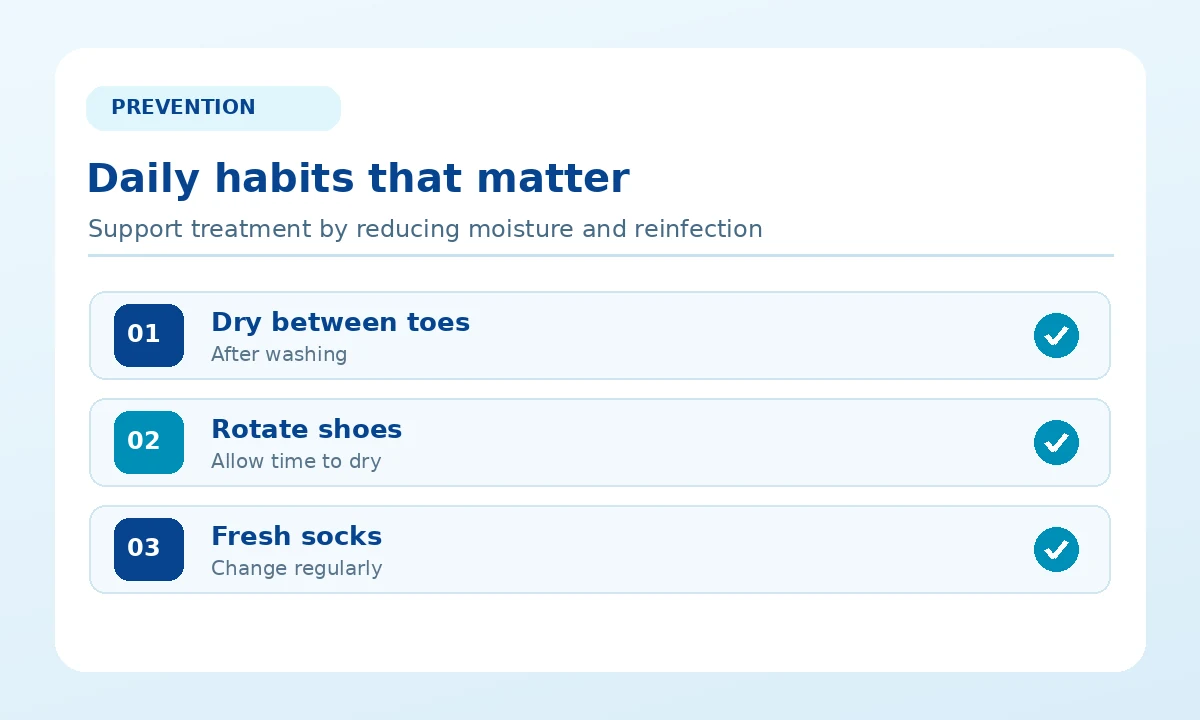
Wash your feet regularly, dry carefully between your toes, wear clean moisture-wicking socks, and give frequently worn shoes time to dry.
Avoid sharing towels, footwear, or nail-grooming tools with other people.
And if you develop athlete’s foot, treating it promptly may help reduce the likelihood of the infection spreading to your toenails or other parts of your body.
The important thing is consistency. Small preventive habits are most useful when they become part of your normal routine.
Why People With Diabetes Should Be Especially Careful
For patients living with diabetes, even a seemingly minor fungal infection deserves attention.
Diabetic neuropathy can reduce sensation, making it difficult to notice small cracks or injuries. Poor circulation may also interfere with the body’s ability to heal damaged skin.
When a fungal infection causes the skin to split or crack, those openings can increase the risk of additional infection.
If you have diabetes and notice persistent peeling, redness, cracking, drainage, or changes around your toenails, arrange a professional evaluation rather than repeatedly experimenting with home treatments.
Increasing redness, warmth, swelling, pain, fever, or drainage can indicate a more serious infection and requires prompt medical attention.
At Capital Foot Care, our Diabetic Foot Care, Routine Foot Care, and Advanced Wound Care services help patients manage foot concerns while addressing factors that may increase their risk of complications.
When Should You Visit a Podiatrist?
You don’t need to wait until a fungal infection becomes severe before asking for help.
If symptoms keep returning, haven’t improved with appropriate treatment, or are affecting your toenails, a podiatric examination can help clarify what you’re dealing with.
Depending on your symptoms, your provider may examine the skin and nails, review treatments you’ve already tried, and recommend additional testing when necessary.
At Capital Foot Care, Dr. Muhammad A. Khalid, DPM, Dr. Riasat Ali, DPM, and Dr. Herman Zarate provide personalized podiatric care for patients experiencing a range of foot and ankle concerns.
Our goal is to help patients feel comfortable asking questions and understanding their options rather than continuing to manage recurring symptoms through guesswork.
Healthier Feet Begin With Understanding the Problem
When a foot infection keeps coming back, it’s understandable to feel discouraged.
But recurring symptoms don’t necessarily mean that nothing will work. Sometimes a different diagnosis, a more appropriate treatment plan, or a few changes in your daily routine can make a difference.
Capital Foot Care welcomes patients at our locations in Riverdale, Takoma Park, and Germantown, Maryland, and Washington, DC.
You shouldn’t have to keep guessing why your feet aren’t getting better.
Frequently Asked Questions About Recurring Foot Fungus
Why does athlete’s foot keep coming back after treatment?
Athlete’s foot can return because treatment wasn’t completed, the infection was acquired again from contaminated surfaces or footwear, or another area, such as the toenails, remains infected. Sometimes the original symptoms were caused by another skin condition.
Can toenail fungus cause athlete’s foot to return?
Yes. Fungal infections can involve both the toenails and surrounding skin. Treating one area while another remains infected may contribute to recurring problems.
How long does athlete’s foot treatment usually take?
Treatment duration depends on the medication and severity of the infection. Many topical antifungal products are used for approximately two to four weeks, although some treatment schedules are shorter. Always follow the specific product or prescription instructions.
Should I see a podiatrist if antifungal creams aren’t working?
Yes. Persistent symptoms may require a different treatment or confirmation of the diagnosis. Professional evaluation is especially important for patients with diabetes, poor circulation, or immune system conditions.